Mecha Domination: Rampage
- 4.5
- Rating
- 1.00M
- Installs
- Free
- Price

 Analysis by App-foxy
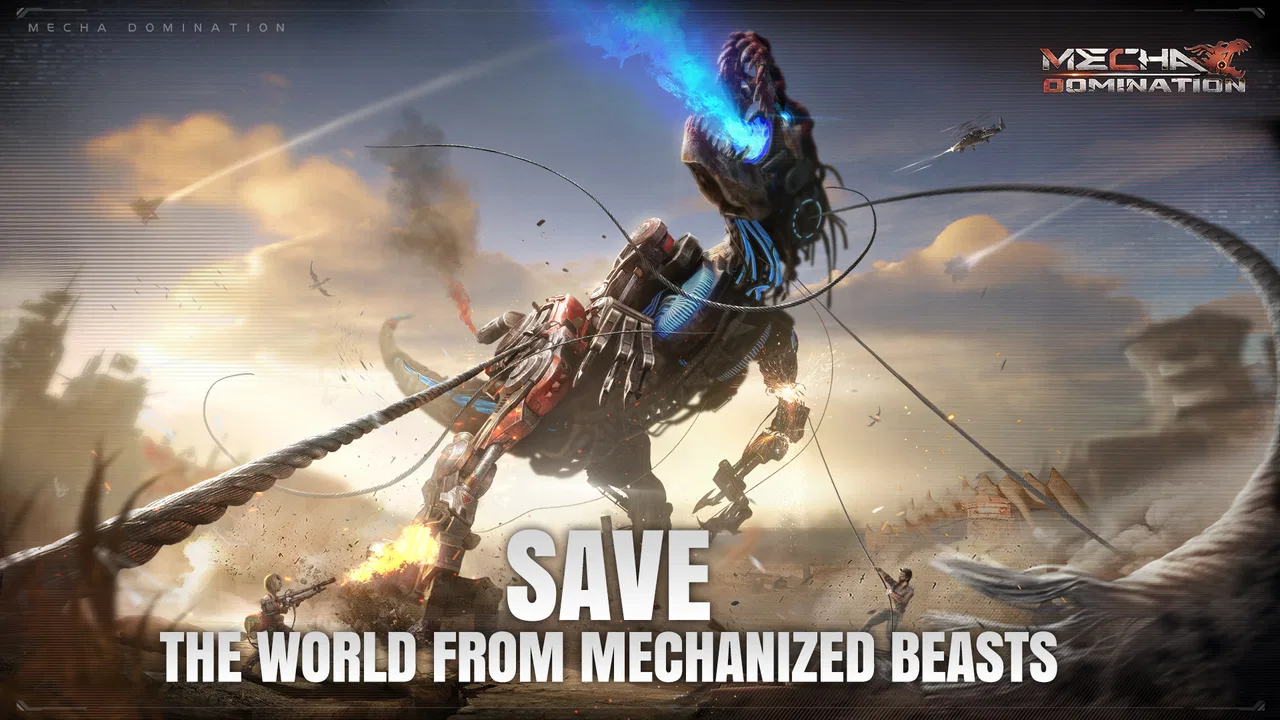
I approached Mecha Domination: Rampage as a mobile strategy game rather than a quick action title, and that distinction matters from the first session. Its world is built around humanity facing mechanical beasts, but the lasting appeal comes from deciding how to grow stronger, where to spend resources, and which battles are worth taking. I found it most enjoyable when I treated each choice as part of a longer plan instead of expecting constant hands-on combat.
Developed by 37GAMES, the game is free to start and aimed at Teen players. It has already attracted more than a million installs, with an average score of 4.5 from roughly twenty-two thousand ratings. Those figures suggest a healthy audience, but they do not tell you whether its particular rhythm suits you. In my experience, the important question is whether you enjoy gradual progression, regular management, and strategic preparation more than immediate, self-contained matches.
How the current version feels to play
The current version is 9.2.0, and I see it as a mature live mobile strategy experience rather than a bare-bones launch product. The central loop is easy to understand: develop your strength, prepare for threats, and keep improving your position. The theme gives those familiar systems a stronger identity than a standard kingdom or military setting, because the pressure comes from oversized mechanical creatures and the need to protect what remains of humanity.
You May Also Like

 Blood Strike: 2.5 Anniversary
Blood Strike’s Loadouts Turn Every Drop Into a Tactical Gamble
A close look at Blood Strike’s custom loadouts: how fast access to signature weapons reshapes its battle royale rhythm, rewards preparation, and narrows the gap between fights.

 Pandora - Music & Podcasts
Pandora’s Music Is Easy to Start, but Harder to Recover
Pandora’s strength is its low-effort path from a seed to a station. Its weak spot is how much confidence it asks you to place in connection, setup, and quiet recovery.

 8 Ball Pool
 Is Built on Rivalries, Rematches, and Routine
A close look at the rivalries, rematches, shared routines, and unanswered safety questions that turn a quick pool match into a persistent mobile community.

 Samsung Music
’s Quiet Strength Is Playing What You Already Own
Its reach comes less from spectacle than from dependable access to a personal library. That simplicity is both the app’s strongest retention engine and its ceiling.

 AccuWeather: Weather Radar
AccuWeather Review: A Quick, Clear Forecast for Everyday Decisions
For everyday plans, the best forecast is the one you can understand quickly. AccuWeather makes rain timing, radar, and local conditions easy to act on, with a few trade-offs.

 Hill Climb Racing
Why Hill Climb Racing Still Turns Crashes Into One More Run
A tiny car, a bumpy hill and one more upgrade: Hill Climb Racing keeps resurfacing because its simple chaos makes every near-miss feel personal.
More From Our News Desk
View All News


What I liked most was the sense of turning a weak starting position into something dependable. Early progress feels useful because upgrades are not just decorative; they change what I can attempt next. I had to think about whether to push forward immediately or spend time improving my foundation. That small decision creates the strategic tension the game needs.
It is also a game that rewards returning regularly. I would not recommend it to someone looking for a complete experience in a single sitting. The design is better suited to short visits throughout the day, with longer sessions reserved for planning, checking progress, and dealing with more demanding objectives. If you enjoy watching a plan develop over time, that cadence can be satisfying. If you want every minute to deliver direct action, it may feel slow.
The Teen rating fits the dramatic setting and conflict, so I would be comfortable describing it as a game for older children and adults rather than a family title for very young players. The free entry point makes trying it straightforward, although the presence of in-app purchases from $0.99 to $99.99 per item means I would recommend setting a spending limit before making progress a habit.
The strategy is in preparation, not just reaction
One useful lesson I learned is not to treat every available improvement as equally urgent. When several upgrades compete for attention, I get better results by asking what is blocking my next meaningful objective. A small improvement that opens a new path can be more valuable than a larger-looking upgrade that only makes an already comfortable area slightly stronger.
This is where the game differs from simpler mobile battle titles. I cannot rely on tapping through every encounter and hoping raw power solves everything. Preparation has a greater effect on how comfortable the next stage feels. I found it helpful to check my overall direction before committing resources, especially when a tempting upgrade could delay a more important development.
Another practical habit is to avoid spending everything immediately after collecting it. Holding a reserve gives me flexibility when a new requirement appears or when an opportunity is more useful than the upgrade I originally planned. That approach makes the game feel less like a sequence of isolated rewards and more like a small resource-management exercise.
What the latest version means for returning players
Players who have been away for a while will find the current build under version 9.2.0, so I would approach it as a chance to reassess an existing account rather than blindly continuing an old routine. A returning player should first look at the current progression path, identify which improvements are already close to completion, and then decide whether the previous plan still makes sense.
I prefer this method because live strategy games can make old habits feel productive even when they are no longer efficient. Before spending saved resources, I would review the available objectives and compare them with the condition of the base and the strength of the roster. That short pause can prevent a returning player from investing heavily in an outdated priority.
The version number is a useful marker of the game’s ongoing state, but it is not proof that every part of the experience will suit every player. I would still judge the game by its present pacing: it asks for patience, repeated decisions, and attention to long-term growth. Someone returning because they remember a fast, combat-focused experience may be surprised by how much of the enjoyment comes from management between confrontations.
For new players, the same advice applies in a simpler form: learn the progression rhythm before spending. I would play through the opening stages, observe which systems become important, and only then decide whether purchases are worthwhile. Since the game is free, there is little reason to rush that decision.
Where it works better than familiar alternatives
Compared with a traditional turn-based strategy game, this title feels more continuous and less neatly divided into individual matches. I am not simply entering one battle, calculating a result, and walking away. The strength I build in one part of the experience affects how confidently I approach the next challenge. That ongoing connection can make progress feel more personal.
Compared with a pure idle game, it gives me more to think about. Passive progress alone is not the whole appeal; choosing priorities and preparing for tougher situations matter. However, it does not replace a full console-style strategy game. The mobile format favors accessible decisions and repeated progression, so players wanting deep campaign maps, elaborate diplomacy, or long uninterrupted tactical missions should look elsewhere.
Its mechanical-beast setting is another advantage over generic strategy alternatives. The theme gives the upgrade loop a clear purpose: strength is not abstract, because it is tied to survival against a recognizable threat. I found that made routine development easier to follow, even when the underlying activity was familiar.
Everyday use: a game for brief planning sessions
A realistic way to use this game is during a commute, a lunch break, or a few quiet minutes in the evening. I might open it to collect progress, check what is close to completion, and choose the next improvement. That kind of session works well because it gives me a clear task without demanding a full hour of uninterrupted attention.
For a longer evening session, I would use the time differently. I would review my current strength, decide which objective deserves priority, and avoid jumping between unrelated improvements. The game becomes more enjoyable when I enter with a plan. Without one, it is easy to spend resources simply because they are available, then feel that progress has become scattered.
This routine also reveals one of the game’s main trade-offs. Frequent players can keep momentum and make informed choices, while people who only open it occasionally may return to several unfinished decisions at once. That is not necessarily a flaw, but it means the game rewards consistency more than complete casualness.
Where the experience still asks too much
The biggest limitation for me is the possibility of repetition. Once the basic loop becomes familiar, progress can feel more like maintaining a schedule than discovering something new. Players who enjoy optimization may see that repetition as a satisfying puzzle, but others may find the steady cycle of improvement and preparation too similar from one visit to the next.
The free-to-play structure also deserves honest attention. The purchase range is wide, and even when I can progress without paying, the presence of paid options can affect how I judge the pace. Anyone sensitive to pressure around faster growth should decide in advance whether they will spend nothing, make occasional small purchases, or set a strict monthly boundary. Making that choice before becoming invested is easier than trying to impose it later.
I would also skip this game if I wanted a premium-feeling, self-contained adventure with a clear ending. Its appeal is tied to continued development, not a short campaign that I finish and put away. Likewise, players who dislike checking in repeatedly or managing several layers of progression may prefer a one-time strategy game with fixed missions.
Another friction point is that strategic depth can feel uneven depending on how much attention I give it. If I play carelessly, the game risks becoming a routine sequence of upgrades. If I actively compare priorities and preserve resources, it becomes more interesting. That means the quality of the experience depends partly on the player’s willingness to engage with the systems rather than simply claim rewards.
Who should try it, and who should pass
I would recommend it to players who like science-fiction survival themes, gradual power growth, and mobile strategy that can be checked in small sessions. It is especially suitable for someone who enjoys deciding what to improve next and watching that decision shape later progress. The mechanical-beast premise gives the familiar management loop enough personality to keep it from feeling completely interchangeable.
I would be more cautious with players who want direct control over every second of combat. This is not the best match for someone searching for a reflex-driven action game or a competitive experience where each match is short and fully independent. It is also not ideal for people who find in-app purchases distracting, even though the game can be started without paying.
The rating of Teen should guide parents who are considering it for younger players, and I would also pay attention to the way regular progression can encourage repeated visits. For adults, that may be a convenient fit. For younger users, I would combine the age guidance with clear rules about play time and spending.
What I would watch before committing long term
My main question over time would be whether the later progression continues to offer meaningful decisions instead of relying too heavily on the same improvement cycle. The current version gives the game a substantial foundation, but long-term value depends on how well the strategy remains interesting after the early sense of discovery fades.
I would also watch how comfortable the free path feels for a patient player. The game’s price is free, which lowers the barrier to entry, but the broad purchase range makes personal spending discipline important. I would not buy anything simply to fix impatience. I would first decide whether the underlying loop is enjoyable at its natural pace.
For existing users, the best sign would be progression that continues to reward planning rather than only accumulation. For new users, the best test is simple: play long enough to experience the management rhythm, then ask whether choosing priorities feels satisfying or merely necessary. That answer is more useful than the store score alone.
After spending time with it, I see Mecha Domination: Rampage as a capable free strategy game with a clear identity, a persistent progression loop, and enough planning to separate it from a basic idle title. Its strengths are the mechanical-beast setting and the satisfaction of building toward stronger challenges. Its weaknesses are the repetitive potential, the need for regular attention, and the pressure that some players may feel around optional purchases.
I would recommend giving it a try if you enjoy gradual development and can set sensible limits around time and spending. I would skip it if you want a finished, action-heavy adventure or a strategy game built around deep, self-contained scenarios. For the right player, it is an easy game to revisit and steadily improve in; for the wrong one, the same rhythm may quickly feel like another mobile obligation.
FAQs for Mecha Domination: Rampage
01What is Mecha Domination: Rampage about?
Mecha Domination: Rampage is a post-apocalyptic strategy and survival game in which players explore a world dominated by dangerous mechanical creatures. You build and upgrade a base, gather resources, research technology, recruit survivors, and assemble teams to fight powerful mechas. The game combines city management, tactical battles, exploration, and progression systems, so it is aimed at players who enjoy long-term development rather than short, standalone matches.
02Is Mecha Domination: Rampage free to download and play?
The game is generally available as a free download, allowing players to begin without paying an upfront purchase price. However, it includes optional in-app purchases that can provide extra resources, faster upgrades, premium items, or other progression benefits. You can play without spending money, but progress may feel slower at later stages. It is also wise to review your device’s payment settings if children may access the game.
03Does Mecha Domination: Rampage require an internet connection?
An active internet connection is normally required for most important features, including account synchronization, events, multiplayer activities, rewards, updates, and communication with the game servers. Because of this online design, the experience may be interrupted by weak Wi-Fi or mobile data. Some menus or previously loaded content might open briefly offline, but players should not expect the full game to work reliably without an internet connection.
04Is Mecha Domination: Rampage suitable for children?
The game may appeal to older children and teenagers who enjoy strategy, resource management, and science-fiction combat, but parents should check the age rating in their region before downloading it. Battles involve mechanical violence, and the game can include chat, competitive features, advertisements, and optional purchases. Parents may want to enable purchase restrictions, review privacy permissions, and discuss spending limits before allowing younger players to use it.
05What should new players focus on first in Mecha Domination: Rampage?
New players should concentrate on completing the tutorial, upgrading essential base buildings, improving resource production, and following the main missions before investing heavily in optional features. Developing a balanced team is usually more useful than upgrading only one powerful unit. It is also important to join an active alliance when available, because alliance assistance, shared events, and group rewards can make construction and research progress considerably easier.
Pros
- Strategic combat rewards careful team composition and timing.
- Mechs offer varied roles
- keeping battles from feeling repetitive.
- Base development adds meaningful goals beyond individual missions.
- The post-apocalyptic setting gives the game a distinctive atmosphere.
- Regular events can provide extra objectives and useful rewards.
Cons
- Progress can slow noticeably without frequent resource management.
- Some upgrades require long waiting periods or premium currency.
- The large number of systems may overwhelm new players initially.
- Battles may feel repetitive after the novelty of new enemies fades.
- Online features require a stable connection to work properly.

Mecha Domination: Rampage
Gallery